Issue #152, Winter 2007


Balancing Act

Old definitions may be obsolete as CDCs weigh whether to grow and how to build their impact in today's social and economic environment.


Is bigger always better? Among community development practitioners, it often appears to be the case these days. Many nonprofit housing corporations founded in the late 1960s and early 1970s, with large staffs and numerous programs, eventually lost their major funding sources and either contracted or went out of business. In the past decade, some community development organizations and their supporters have again begun to consider increasing their size as a means to achieve greater impact. But in an era of shrinking resources, the question of whether size matters demands close scrutiny in a field where “going to scale” has become a commonplace goal and is generally taken for granted as beneficial.

In the CDC world, “going to scale” typically means increasing the number of affordable housing units the organization produces and generating economic growth for more people in a larger geographic area. The goal is to house more people, achieve greater programmatic and administrative efficiencies, and to become more financially self-sufficient. The assumption is that by getting larger, organizations will be better able to accomplish these objectives.

In fact, there is no foolproof, cookie-cutter approach to building an effective, large-scale CDC (the term we are using throughout to refer to all nonprofit housing corporations). The number of large CDCs that have collapsed in the past decade—Eastside Community Investment in Indianapolis; Asian Neighborhood Design in San Francisco; National Temple CDC in Philadelphia; People’s Housing in Chicago; Whittier CDC in Minneapolis—is indicative of the challenges in building and running them successfully.

Large and small community development groups can both play essential roles in the production of affordable housing by playing to their strengths. According to Stacey Stewart, senior vice president of the Office of Community and Charitable Giving at Fannie Mae, “Getting to scale and operating a small nonprofit housing group are not mutually exclusive. Quite the contrary: if handled right, these two operating philosophies can support each other in ways that make both more effective.”

Stewart believes that an organization going to scale and operating across multiple states simply cannot have the kind of neighborhood-by-neighborhood, on-the-street knowledge of where need is the greatest and of what’s working and what’s not. A neighborhood community development organization does have that local knowledge. When the two enter a smart partnership, local knowledge can inform scale development, and scale development can put more housing units in production than the small nonprofit could ever hope for.

Because the community economic development environment has changed dramatically in the past 40 years since the founding of Brooklyn’s Bedford-Stuyvesant Restoration Corporation and other prototypical community development corporations, an understanding of these changes is critical to crafting effective and sustainable 21st-century CDCs.

The major environmental changes include:

The growth of new funding sources and resource bases. The early CDCs, including Bed-Stuy Restoration, were heavily dependent upon direct federal funding sources, notably the Office of Economic Opportunity (OEO). The early CDCs received millions of dollars of project-based funding. Many of these funding sources were eliminated over time, and a number of the early CDCs that relied too heavily on project funding disappeared. Today’s CDC funding bases are more diversified, and most public funding sources at HUD (Community Development Block Grants and HOME Investment Partnership Program), HHS (Community Economic Development Fund), and the Department of Labor’s Jobs Training Partnership Act tend to provide smaller grants and are very competitive.

Public-sector funding of CDCs has been cyclical over time, and resources at the federal level are currently flat to declining. CDCs have shifted their real estate funding strategies to local and state resources and to the Low-Income Housing Tax Credit and New Market Tax Credit program.

Growing competition in low-income communities. The number of CDCs has grown exponentially in the past 20 years, from 1,500 to more than 4,600, according to a 2005 census conducted by the National Congress for Community Economic Development. Moreover, private developers have increased their interest in low-income communities, resulting in significant competition for real-estate development projects. CDCs should be proud of the role that they have played in launching the revitalization process of their communities: They have built and renovated more than 1.25 million units of affordable housing throughout the United States since the late 1960s. Their success in physical revitalization has encouraged other nonprofits as well as private developers to undertake development projects. Neighborhoods in strong economic markets are becoming gentrified, forcing the existing CDCs to develop new strategies and tools to help low- and moderate-income constituents cope with these market forces.

Growth of regional economic markets. During the past 40 years, there has been a major shift in resources from inner cities and rural communities to suburban and regional centers. Jobs have been lost in low-income communities, forcing residents to pursue employment and housing opportunities in suburban and regional centers. CDCs are starting to follow their constituents and develop affordable housing and economic and community resources outside their traditional neighborhood or community. Savvy CDC leaders have started looking beyond their municipalities, paying attention to political and economic forces at the county, region, and state level to influence policy and access resources.

Revolution in information systems and technology. The development of diverse information systems, database technology, and communication tools has enabled CDCs to function with greater efficiency and reduced expense. Today, these systems are infrastructure essentials for any CDC seeking to expand its impact and effectiveness. The key is to have the necessary technology support, as well as to have staff who understand how to use the technology and make the best decisions based on analysis of the vast amount of data these systems can access and aggregate.

Shifting demographics. Since the 1970s, the influx of individuals and families from around the world pursuing work opportunities in the United States has affected the demographic composition of low-income communities, which are often the entry point for new residents. Around the country, there are CDCs serving communities that have changed from majority African-American to majority Latino and/or with a sizeable Asian population. This can be challenging to established CDCs, which now need to develop new cultural competencies, services, and staff and board composition to better reflect the new community. (See “Have Community, Will Travel”)

Aging of CDC founders and longtime directors. Many long-term CDCs have benefited from the guidance of a stable, talented, and entrepreneurial group of founders and/or long-time executive directors. As these leaders retire in the coming years, their organizations must cultivate new leaders from among current staff and board members or recruit outside talent. Different skill sets and competencies are needed for the next generation of CDC leaders. (see “Out Front and In Sync ”)

Why and how should a CDC expand its size, impact, and effectiveness?

The complexity of the environment in which contemporary CDCs operate increases with the organization’s size and number of initiatives. Thus, CDCs seeking to grow have to spend time both on growing the organization and sustaining its effectiveness. The more diverse the funding base, the stronger the administration and operational systems; the greater the number of partners, the greater the likelihood that an expanding CDC can remain sustainable and viable.

Operating at a larger scale requires careful planning, effective decision making, and steady, often aggressive growth that takes a keen business sense and the ability to balance income-generating activities with those dependent on subsidies. The organization’s stakeholders (board, funders, and partners) need to understand this balancing act and to recognize when projects jeopardize the viability of the organization.

One big advantage of expanding the geographic base is that organizations can spread their risk and tap new resources. For example, if the market is soft in one area, resulting in properties losing money, the losses can be offset by projects in other markets that are making money. Increasing numbers of CDCs are undertaking mixed-income housing and economic-development initiatives to generate revenue for their subsidized costs and operational expenses. An expanded geographic base also provides more opportunity for projects, resources, political support, and partners.

Another advantage of increased scale is that larger organizations can sometimes provide a more powerful voice in the public-policy arena when they advocate for their constituents and for additional resources for affordable housing. For some legislators, a large number of housing units and job creation make the difference in their level of support for community development initiatives. This is especially true at the local and state levels.

There is no silver bullet for deciding how to increase the impact and effectiveness of a CDC. But the experience and practice of large CDCs around the country point to some pivotal factors, including making effective strategic decisions; building organizational capacity; expanding the geographical target area; and developing financing strategies and tools that lead to long-term growth and sustainability.

The Importance of Strategic Decisions in Building an Organization

Strategic decision-making clarifies the needs of a CDC’s constituency and what activities it undertakes. According to George Knight, former director of NeighborWorks America, “Lots of organizations die from making poor strategic decisions. Private companies fail from taking the wrong strategic path, too. Maybe even nations. That’s why strategic direction should be the top concern of a CDC board.”

CDCs should build upon their existing competencies and skills when making assessments of options for growth. In the late 1990s, the Local Initiative Support Corporation (LISC) analyzed six CDCs that had serious management and financial challenges. LISC found that these organizations did not have the internal discipline to accept the insights derived from objective analysis. The LISC report, “Building Durable CDCs,” concluded that there are dangers for CDCs in starting certain kinds of for-profit ventures, particularly construction-management subsidiaries, service-based businesses, or other initiatives that have had high failure rates nationwide. A number of mature CDCs have started similar businesses to those identified by LISC and a number of them have had problems because of the nature of the enterprise and the staff’s lack of business management experience.

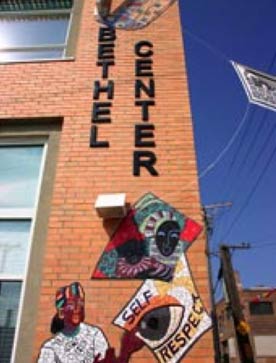
Steven McCullough, president and CEO of Bethel New Life CDC in Chicago since 2005, has led his organization in crafting a new comprehensive strategy. McCullough replaced long-time director and founder Mary Nelson, who had developed an array of initiatives. He has focused on making the Garfield Park and Austin neighborhoods communities of choice for existing and new residents. Bethel New Life has narrowed its focus on affordable housing, education, and sustainable wealth creation. It currently runs 15 programs, each of which has been assessed for its contribution to the areas of concentration. McCullough said the group has recently begun to transfer some programs to community partners who can more effectively provide the relevant services, and some other programs may also be transferred. He stressed that even five years ago, many of the partner organizations did not exist, and that since its inception in 1979, Bethel had to fill the void. This is no longer the case, and by exiting programs that do not fit the new strategy, Bethel will be more focused and intentional in its approach.

When asked about the best strategic business decisions community development practitioners have made in growing their organizations, Joe Errigo, past president and CEO of CommonBond Communities in Minnesota, boiled it down to one handy phrase: “The right people, the right deals, and the right partners.” However simple Errigo’s formula sounds, the right choices are not always self-evident, especially when there are numerous options.

Choosing the right real-estate deals, for example, is the result of experience, skilled analysis, competent team members (architects, contractors, etc.), and some luck. It is helpful to have an interdepartmental review process, in advance, that lets you examine the project for the immediate gain as well as the long-term benefits. For example, REACH Community Development in Portland, Ore., establishes an interdepartmental team at the outset of each new real-estate project. The team uses a detailed task list to take the project from inception to operation. The facilitator gives clear assignments and due dates for each task, and the team meets regularly to ensure accountability.

A CDC board of directors can also help review and approve projects at pivotal decision-making points. To do so, the board needs project-development knowledge, political savvy, funding connections, and community knowledge, and acquiring this variety of expertise takes time. Nonprofit board-development experts stress that too many boards focus on minutiae rather than the strategic vision and direction of the organization. They commonly spend 80 percent of their time on the past and present and only 20 percent on the future, when their priorities should be reversed.

It is critical not to over-extend the organization. Janaka Casper, president and CEO of Community Housing Partners Corporation (CPHC), in Virginia, says one of the keys to CPHC’s success has been to “develop the discipline to say no.” Casper adds, “Don’t let emotion and mission let you make bad business decisions.” For CPHC, this discipline resulted in the termination of their HVAC and indoor plumbing business in 2003, resulting in a more mission-focused and financially successful organization. This example underscores the need for CDCs to stay focused on a few core strengths and build initiatives and product lines that flow from these competencies.

Most urban CDCs have expertise in neighborhood planning, real-estate development, and some forms of commercial or business development. Building additional capacity in such areas as child care, workforce development, and transportation can compromise a CDC’s ability to be effective in its core areas. This is not to say that CDCs should never venture into new areas, but they have to be careful and build the professional capacity (staff, board, consultants) to do so successfully. Often, the sounder path is forging a partnership with existing organizations that have the requisite expertise and share a similar mission.

As CDCs begin to expand their scale and impact, the level of risk increases. The community-development business requires entrepreneurial behavior and fast action when appropriate. But it also requires thoughtfulness and deliberation when moving into new housing products, new lines of business, or new markets. The point is that risk needs to be thoroughly understood, and the CDC must have identified sufficient resources and capacity before plunging ahead. Understand the context and the politics. Know your core competencies and assess the potential pitfalls in advance.

The sudden collapse of Eastside Community Investment in 1997, for example, was brought on by two very risky initiatives. The first initiative, Shelter Systems Inc., was a wood panel and wood truss-manufacturing firm that did not have significant contracts or relationships with the building industry and employed workers with limited education and skills. The second, the Opportunity Factory, was designed to link job training to business development by combining workforce development (education, training, placement, child care, and transportation) and economic development (job creation and real-estate development) initiatives. ECI should have spread the risk to other parties so that it would not assume all the losses, which totaled more than $2 million. This could have been done by having private-sector partners manage some of the initiatives, and having other nonprofit partners providing some of the support services and joint venturing or raising funds together. Spreading or sharing the risk with other partners is an excellent way to reduce the financial vulnerability that CDCs often face, especially with project delays.

Once the CDC has done a careful assessment of the market, competitors, and revenue projections and analyzed the economic and organizational risk, the next step is to determine the capacity and resources needed. One of the most common mistakes made by organizations is the failure to project accurately the time, staff resources, and finances required for an initiative.

After identifying the capacity and systems needed for expansion, the CDC should be strategic about the mix of financial resources needed for the initiative to succeed. Practitioners should diversify their funding base, determine how to generate revenue from the development and management of the project, assess what fees they can earn, and consider how to reduce the cost of debt service for the project.

Building Capacity to Increase Scale and Effectiveness

In speaking with CEOs of CDCs that have grown successfully, one over-arching lesson emerges: It is essential to build organizational capacity before launching major new initiatives and have professional staff in place when the project starts, not after the fact.

According to Mid-Peninsula Housing Coalition president Fran Wagstaff, who over the past 23 years has led her agency to develop more than 6,400 units of housing in the San Francisco and Monterey Bay area, “It is essential to bring systems along so that growth is not a crisis.” With growth comes more activity and responsibility, such as managing multiple real-estate development projects simultaneously, increasing your property-management responsibilities, and bringing on more staff to handle the work. All these changes cause pressure on the operational systems: accounting, technology, administration, asset management, and human resources.

Finding the resources to add the necessary infrastructure is a common dilemma for growing organizations. Frequently, the new staff or computer system is needed before the revenue have been generated to pay for it. One Economy Corporation, a leading national technology and community-development nonprofit based in Washington, D.C., encourages all CDCs to develop a technology plan for equipment, systems, and software upgrades to meet the evolving need of the CDC. The technology plan should be anchored in the organization’s culture and understand the multiple constituents that CDCs serve from residents to small businesses to local government to other nonprofits. The plan should view technology as an ongoing operational cost and, most important, have the full commitment and support of the board of directors.

Growth also entails changes in the requisite skill-set for employees. For example, if a CDC is going to expand its housing production and management, then it will probably need staff with considerable expertise in developing and managing multiple large-scale projects. Staff members who perform well when the organization has 500 units may not be effective when the organization has 2,500 or 5,000 units. The executive staff may need to balance “growing your own talent” with “buying the talent,” especially as projects become more sophisticated.

Hiring new staff with more professional experience usually requires a higher salary, which may trigger salary adjustments throughout the management team, producing major budget impacts. Also, it can be difficult to integrate new employees with technical or corporate backgrounds into the nonprofit culture alongside longtime employees who have a service or mission approach to their job. Sometimes it can take a few tries to get the right talent in place. CDC leaders need to communicate to major funders about the nature of this acculturation process, to help them to view their support of the organization as a long-term investment with important social and economic returns.

As the organization grows, it is important to widen the circle of accountability beyond the CEO to include the board of directors and the senior management team. Large CDCs need COOs, CFOs, development directors, property managers, and senior technology staff—a leadership team with shared decision-making and management responsibilities. According to Robin Hughes, executive director of the Los Angeles Community Design Center, “It is essential to attract the right team that can not only do their job day-to-day, but who can also contribute to the strategic thinking of the organization.”

Determining the Right Geographic Size and Support

Once the CDC board and staff refine the strategic direction of the organization and build the organizational capacity, the next question is where the CDC should concentrate its development initiatives. In the early years of their existence, most CDCs focus on a specific, relatively small geographic neighborhood and successfully develop numerous real-estate initiatives. Many of the neighborhoods have a limited number of housing and economic opportunities. In some of these neighborhoods, low-income families who lived there have been pushed to outer-ring neighborhoods and suburbs by rapid gentrification. To continue serving the displaced population, CDCs need to shift their focus to new areas and new low- and moderate-income populations.

A major challenge faced by CDCs with large staffs is having enough current and future projects to be able to pay salaries and overhead to maintain organizational capacity. Some large CDCs serving small geographic areas have completed numerous real-estate projects, and new projects in their target neighborhood are limited. This provides an opportunity for the CDC to carefully explore expanding into additional neighborhoods, often contiguous to their original community. Rural CDCs with a service area of several counties find themselves expanding to statewide organizations given their capacity and financing resources.

A good example of a community-based organization that has expanded its service area and works with diverse local organizations is Manna Inc., a CDC founded in Washington, D.C., in 1982 to create homeownership opportunities for low-income residents. Manna’s initial focus was mostly in the Shaw neighborhood, but it grew sufficiently to be able to expand its work into many other neighborhoods in Washington, D.C. It has developed considerable expertise in project design, homeownership strategies including limited-equity coops, condos, construction management, homebuyer clubs, affordable mortgages, often partnering with tenant associations of buildings with low-income tenants to help them develop their rental buildings into homeownership opportunities. Manna currently has more than 250 units in the pipeline and a full-time staff of 50.

Another example of a CDC serving a broad geographic area is Community Equity Investments (CEI) in Pensacola, Fla., which focuses on small-business lending. According to Dan Horvath, CEI’s president, “CEI targets activities that make use of our competitive strength in small-business lending and then expand to related products as well as geographically.” The organization has expanded its geographic area from Pensacola to the entire Florida panhandle as well as Southern Alabama. Pensacola is a small city with a population of less than 100,000, and by having a regional economic development strategy, CEI is able to build capacity as well as to generate significant and diverse resources over several states to increase its impact and financial sustainability.

These examples of CDCs that have expanded their size and geographic reach raise important governance, policy, and stakeholder issues. CDC boards historically have represented the interests of the constituencies they serve. If a CDC’s purview changes, what governance structure should the organization use? How does it ensure that it is representing the interests of the communities it intends to benefit? In response to these concerns, some CDCs have developed outreach strategies and advisory committees. Rural Opportunities Inc., a rural farm-worker and community development organization that operates in five states and Puerto Rico, has formed community development advisory committees for each location and has several representatives from each state on the board.

CDCs expanding their geographic area also must build new program and political relationships with public-sector administrators and elected officials, especially since the they are heavily dependent upon public-sector funding streams. Isles, Inc., a CDC serving Trenton, N.J., is in the process of becoming a regional organization to both meet the needs of additional low-income families in Mercer County and to raise new resources to support Isles’ objectives. Trenton has a high concentration of poverty, and Isles, whose mission is strengthening families and fostering healthy communities, is working to help families become more self-sufficient through housing, social, and economic opportunities. Isles is completing several major real-estate initiatives outside of Trenton and intends to do others in the future.

Marty Johnson, Isles’ founder and president, says that a regional approach requires a significant organizational investment to understand the new markets and opportunities. Johnson cautions that CDCs pursuing regional strategies need advisers and committees that help build and maintain regional relationships. To reflect its new reach, Isles has refashioned its board of directors. One-third of the board members are direct recipients of products; 1/3 are board members with regional connections and resources; and 1/3 serve as ambassadors to other nonprofit and for-profit organizations in the Trenton region. Isles has launched a $10 million capital campaign and the regional supporters will be critical to the success of the campaign.

Financing Tools and Strategies for Financial Sustainability

Given the steady drop in federal housing and economic development support over the past two decades, CEOs need to be creative and innovative in accessing new capital streams to keep the projects coming. Several CEOs have worked through trade organizations, such as the Housing Partnership Network, to create new financing instruments such as conduit bond and predevelopment loan programs and property insurance products to meet their needs. Others have formed partnerships with for-profit developers that have allowed them to get into larger deals. Restructuring old deals has also been a fruitful way of creating new capital for some groups.

For example, to increase its financial sustainability, Bethel New Life has adopted a fee-for-service strategy and provides services to attract market-rate clients in addition to low-income clients. It is expanding the reach of its elder-care and in-home care programs in surrounding communities aimed at a client base that can pay market rate.

In addition to creative financing, CDCs need to be involved in policy development that will ultimately deliver more resources to the field. For example, in California, two engines of affordable-housing development are a mandatory 20-percent set-aside of TIF (tax-increment financing) funds for affordable housing, and inclusionary-zoning ordinances adopted by many jurisdictions. These policies have carved out existing resources for housing and spurred for-profit developers to work with nonprofits to meet their inclusionary housing requirements.

Once a CDC has a large portfolio of properties, managing the assets becomes a time-consuming and important task. Where that responsibility rests varies among the organizations. Development staff is likely focused on new deals, so someone on staff must be designated to focus on existing assets. Regular review of the properties’ financing, reserves, operating surpluses or deficits, and condition will help keep the portfolio in top form and may also generate additional equity through restructuring and refinancing—a growing source of revenue for large-scale CDCs.

Federal, state, and local policies and regulations often make it impossible for groups to benefit financially from their own success. For example, restrictions on project cash flow or the use of reserves can easily work against organizations that are trying to become more self-sufficient.

Practitioners and trade associations need to actively promote new local, state, and federal policies that will benefit the organizations working to achieve a greater degree of financial independence. Documenting best practices and success stories on regulatory and policy changes can often help in educating policymakers and generating support from our public-sector partners.

The environment in which CDCs operate has changed dramatically since their inception in the late 1960s. While there are many organizational factors that contribute to the effectiveness and growth of CDCs, the most important ones in the current environment are thinking strategically, leveraging resources, and using sound management practices in assessing and implementing the agenda. These are the benchmarks for a successful 21st century community development organization.

Dee Walsh is the executive director of REACH Community Development, a 25-year-old Portland, Ore.-based community development corporation that provides innovative affordable housing solutions and supportive programs for lower-income renters and homebuyers. Robert Zdenek, interim executive director of the National Housing Institute, has more than 30 years of leadership and practitioner experience in community economic development, including serving as president of the National Congress for Community Economic Development for more than 13 years.


Resources

“Built to Last,” by Robert O. Zdenek and Carol Steinbach, Shelterforce, May/June 2002. www.nhi.org/go/builttolast

“Learning from Adversity: The CDC School of Hard Knocks,” by William M. Rohe, Rachel G. Bratt, and Protip Biswas, Shelterforce, May/June 2003. www.nhi.org/go/cdcfailure

“Time to Remove the Rose-Colored Glasses,” By Pablo Eisenberg, Shelterforce, March/April 2000. www.nhi.org/go/eisenberg

“Seeds of Growth—Sustainable Community Development: What Works, What Doesn’t, and Why,” Federal Reserve System Community Affairs Research Conference, March 2003. www.nhi.org/go/seeds


Back to Winter 2007 index.

<