

Where most people saw only blighted, abandoned streets in New Orleans’ Hoffman Triangle neighborhood, Roz Peychaud saw potential.
The feisty head of the Neighborhood Development Foundation knew that this long-disinvested neighborhood could be saved — and eventually, become a model for how to create vibrant, vital communities all across the city.
Even before Hurricanes Katrina and Rita swept across the Gulf Coast, Peychaud was helping revitalize Hoffman Triangle. The community was perfect for first-time home buyers. Not only could new residents find affordable homes, but they could also draw a new vision of their ideal neighborhood on a nearly fresh slate.
After the storms, the model Peychaud helped create in Hoffman Triangle became a leading light in a city desperate for help. The same struggles the neighborhood had before the storm were suddenly writ large throughout the city.
By restoring long-abandoned recreation areas, creating new charter schools, and encouraging first-time homebuyers to anchor the community, Hoffman Triangle has become a beacon of hope to the rest of New Orleans.
“We’re coming back,” Peychaud recently told Tavis Smiley on his radio show. “We want a new New Orleans that is different – different and more positive for the people who need the opportunities to lift themselves up.”
Two years after the hurricanes and massive levee breaches devastated New Orleans, pioneers like Peychaud are working hard and making progress in nearly every aspect of the rebuilding – from housing to schools to the business sector.
While federal money continues to drip at a painstakingly slow rate from the government to the individual households that need it, local nonprofits and community groups are serving as models of efficiency.
In New Orleans – a city not often associated with strong networks of community-based organizations engaged in advocacy – more than 160 neighborhood associations now actively meet, engage in community planning, and collectivize their efforts to rebuild neighborhoods. Community-organizing groups like ACORN, People’s Hurricane Relief Fund, IAF’s Jeremiah Group, and Churches Supporting Churches have swelled to thousands of members – all determined to hold officials’ feet to the fire until the city and its people are back.
“It groups like these,” said the Rev. Don Boutte, pastor of the St. John Baptist Church in New Orleans, “that are working to educate their constituencies and help them develop the broad-based community-organizing skills this work needs.”
Forging Strategies from Adversity
Despite this hopeful flowering of nonprofit leadership and grass-roots activism, those working for a more just and inclusive Crescent City still must battle to get the federal government to live up to its responsibilities. President Bush’s promise two weeks after Katrina to end “the legacy of inequality” has come up woefully short. Without an infusion of resources and national leadership, we are in serious danger of recreating a city rife with the same racial and economic disparities as before the storm.
The progress so far has clearly been uneven. On-the-ground advocates are struggling to figure out the best strategies for attacking acute short-term problems while always keeping in mind the bigger picture of overall Gulf Coast recovery. But a nuanced strategy has begun to develop.
Virtually on the fly, New Orleans advocates have been forced to create a full-fledged advocacy strategy that simultaneously addresses generations-old problems like racial inequality and economic disparities and new battles like a deeply wounded rental housing market. Thankfully, advocates have been able to draw on the experience, expertise, and historical perspective of local nonprofits and community groups that had been working in New Orleans before Katrina.
Many of the most successful initiatives have followed a similar track, using a combination of direct community actions and behind-the-scenes legislative maneuvering. The most fruitful efforts have followed these steps:
- Bringing together community members to determine what issues are most vital and necessary to tackle.
- Using direct actions such as sit-ins or protests to gain attention for those issues in the wider New Orleans community, media, and policy world.
- Researching to find and provide detailed, hard facts to show the extent of the problem and highlight possible solutions. In all the post-Katrina confusion, policymakers have been particularly receptive to tackling problems they can concretely see, rather than simply hear about through anecdotes.
- Pressing policymakers to enact the suggested solutions. With all that must be addressed in New Orleans on a daily basis, even the best policy proposal may get lost in the shuffle if it isn’t meticulously tracked and spotlighted through the legislative process.
In the housing arena, there has been some progress, but there are still considerable challenges. Along the Gulf Coast, almost 100,000 families continue to be displaced both far and near to home, reliant on temporary housing assistance from FEMA. Perhaps worst-off among these are the more than 50,000 families still in FEMA trailers now known to contain toxic levels of formaldehyde.
Decoding the Rules of Recovery
The slow pace of recovery and the lack of widespread resources have meant heartache for many residents, especially poor residents of New Orleans. Rules governing FEMA recovery funds were intended for smaller disasters. They were simply not fashioned to respond to an event as massive as Katrina – the largest disaster in U.S. history.
The Road Home, established in Louisiana after the 2005 storms, has gone through much turmoil and change and faces a $4.2 billion shortfall. State-run and federally financed, the Road Home is the nation’s largest housing program and has been one of the major drivers of – and sometimes a barrier to – recovery.
The Road Home includes three key housing components:
- Money – indeed, the largest chunk of Road Home funding – for homeowners to cover gaps left after insurance payments.
- Funds for restoring multifamily housing through low-income tax credits and community-development block grants;
- Help for landlords to repair small numbers of rental properties (20 units or less)
New Orleans’ homeownership rate prior to Katrina was low in comparison to the rest of the nation. According to U.S. Census data, over half (53 percent) of pre-Katrina households were renters, compared to 32 percent nationally. Renters occupied more than 100,000 housing units in New Orleans, and over half of these units – approximately 51,700 – were severely damaged or destroyed by the hurricane and subsequent flooding.
But low-income renters have been virtually ignored in the recovery efforts. While 40 percent of Louisianans who lost their homes were renters, only 15 percent of the recovery funds have been designated for restoring rental housing. In New Orleans, the loss of over half the rental housing has led to post-storm rent spikes as high as 250 percent. Still, available recovery resources will only help replace 25 percent of lost rental units.
The reduced number of rental units, coupled with huge increases in insurance and construction costs, has radically altered the rental housing market in New Orleans. Prior to Katrina, 58 percent of all rentals were available for under $500; a recent survey of 2,800 units found few rentals for under $500. A survey of rental units leased in 2007 by the New Orleans Metropolitan Association of Realtors found the average two-bedroom unit rented for more than $1,300. Such increases have been accompanied by a significant rise in homelessness, which has doubled in Orleans and Jefferson parishes – from 6,000 homeless persons before Katrina to at least 12,000 now.
For the huge number of displaced residents with few resources, the recovery has presented a singular set of challenges. Eighty percent of those living in FEMA group trailer parks make less than $15,000. Of the currently displaced citizens who said in a recent Louisiana Family Recovery Corps survey that they want to return to Louisiana, half earn less than $20,000 a year.
Simply put, these families cannot afford apartments in New Orleans at current market rates. The two most frequently cited barriers to returning are difficulties finding affordable rental units or homeowner opportunities back home and an inability to pay expenses associated with moving back to the city.
Fighting NIMBYism
Rebuilding affordable housing is not simply a matter of securing more resources, though. Just like before the storm, community opposition has thwarted many new multifamily or affordable developments. Now, with significant population shifts and the loss of so much housing, many communities are stiffening their resistance.
In three of the most heavily damaged parishes – Jefferson, Orleans, and St. Tammany – parish districts have threatened or enacted moratoriums on multifamily housing. Some are enacting zoning changes on properties that have been awarded multifamily-recovery subsidies, thus killing several current projects and threatening future ones.
Officials in Jefferson Parish, just west of New Orleans, are studying the potential for zoning changes that can be applied to the development of sites that have been awarded low-income housing tax credits. The aim is to slow down or stop permit processes designed to increase affordable housing in their jurisdictions. State legislation has also been introduced to require local approval before the state can award funds for affordable housing. These roadblocks forced Volunteers of America (VOA) to pull out of a senior development in Jefferson Parish that would have replaced a flooded facility previously located in New Orleans. VOA decided against the project because it feared that an extended permitting process could lead to financial losses, despite the fact that it was originally zoned for multifamily development.
Permitting strictures and opposition to multifamily units have been accompanied by high rates of housing discrimination. An April 2007 investigation by the Greater New Orleans Fair Housing Action Center revealed that 57.5 percent of landlords discriminated against African-American testers searching for rental housing.
Public Housing and Other Assistance
Before Katrina, about 14,000 families lived in either HUD-assisted or public housing in New Orleans. About 9,000 of those families were in HUD-assisted units scattered throughout the city’s neighborhoods. Many units remain vacant or unrestored and continue to create blight and unsafe conditions in neighborhoods. As of July 2007, 5,800 units of HUD-assisted stock were not open in the Gulf Coast, the vast majority in New Orleans. More than 4,000 families formerly in public housing remain in limbo as plans and financing for their homes remain unresolved.
The Housing Authority of New Orleans (HANO) has been under HUD receivership since 2002 and through this capacity HUD has played a major role in deciding the fate of public housing in New Orleans. In June 2006, HUD announced plans to demolish 5,000 public-housing units, the majority of which are in four developments – C.J. Peete, St. Bernard, B.W. Cooper, and Lafitte – and reopen only 1,000. Residents responded angrily: They had been locked out of their homes for months after Katrina and were unable to collect their belongings or move back in to their apartments, many of which suffered no flood damage. Local civil-rights attorneys representing public-housing residents filed a lawsuit against HANO and HUD seeking tenant access to their homes and assurance that their input would be included in any redevelopment plans for the property.
“We have to ask, who we are redeveloping public housing for?” said Laura Tuggle of New Orleans Legal Assistance. “Is it for the former residents or the community? Is it better to tear down conventional public housing now if it ends up taking 10 years to rebuild and we don’t end up serving former residents?”
Just before Katrina’s second anniversary, predevelopment agreements were signed for C.J. Peete, St. Bernard, B.W. Cooper, and Lafitte. The four developments are to become lower-density, mixed-income complexes, and financing is in place for less than a third of the units at their former levels of affordability. Some of the developers of these properties, such as Providence Community Housing, have agreed to one-to-one replacement of former units and are working with residents on plans. But housing subsidies will be needed to ensure that other units will be affordable to former residents. Unless the Gulf Coast Housing Recovery Act (SB 1668) – currently before the U.S. Senate Banking Committee – is enacted, displacement of former residents seems certain.
The Gulf Coast Recovery Act would require HANO to:
- Open 3,000 units or as many as needed by former residents who responded affirmatively to surveys asking about their desire to return by October 30, 2007;
- Make available housing in the same neighborhood for all residents who wish to return;
- Provide housing vouchers that can be used elsewhere when neighborhood units are unavailable;
- Ensure that former residents are included in any redevelopment planning;
- Replace any pre-Katrina occupied housing unit with a housing unit or project-based voucher and replace all vacant pre-Katrina public housing units with a voucher to be used in low-poverty neighborhoods in the Gulf.
Homeowners’ Dilemma
While New Orleans’ homeowners have had more federal resources available to them than renters, they are still hurting. Louisiana originally requested $14.9 billion for housing recovery, but ultimately received only $7.5 billion, forcing the state to design a program commensurate with available funds. Calculations for the amount needed to fund the Road Home homeowner rebuilding-assistance program were based on a FEMA estimate that 123,000 homeowners experienced major or severe damage to their property. By August 2007, when applications closed, there were more than 184,000 applications – one-and-a-half times more than expected.
Grass-roots and Community-based Groups Step In
As it became clear that government-driven housing restoration in the Gulf was stumbling, grass-roots organizations, community groups, and advocates have stepped in to fill the void. While continuing to organize, advocate, and engage legislators, they are also directly taking on rebuilding tasks. All of the currently allocated funding for large-scale multifamily rental development has been distributed to nearly 200 projects in southern Louisiana – 71 of which are in New Orleans – that will repair or build 8,400 affordable apartments. Ground has been broken on 14 of these projects, some by a new and growing cadre of nonprofit developers.
“We are working with community groups to create a model you can follow,” said Roz Peychaud of the Neighborhood Development Foundation. “We need more people who are willing to be pioneers.”
There are new players in the development field in New Orleans, often with roots in community-based work and eager to restore housing opportunity for low-income residents: Providence Community Housing is associated with Catholic Charities; Mary Queen of Vietnam Community Development Corporation was launched by the Mary Queen of Vietnam Church; and ACORN Housing has a new local branch. The NHP Foundation, a national affordable-housing preservation group, broke ground on a 209-unit mixed-income complex in the heavily damaged New Orleans East neighborhood; and Providence Community Housing has 114 rental units under construction and 1,818 more on the way.
There also has been some progress for landlords of small rentals – like the “double shotgun” houses where an owner often lives in half the house and rents out the other half. Owners of damaged rental houses have been awarded forgivable Road Home loans to repair more than 2,724 homes in New Orleans under agreements to make the rents affordable. Fifty-eight of these awards were made to nonprofits in New Orleans, who have agreed to extend the affordability term required for private grant recipients from the minimum of three to 20 years on 108 of the funded units.
New Orleans Legal Assistance’s Laura Tuggle has been working to incorporate tenant protections into the Road Home programs. “We are more concerned about the tenants’ end – what will the nitty-gritty of renting an apartment mean in real time for a tenant?” she said. Tuggle has helped to get Road Home administrators to agree to implement a notification system for tenants when their apartment’s affordability term is up, so families aren’t suddenly faced with eviction.
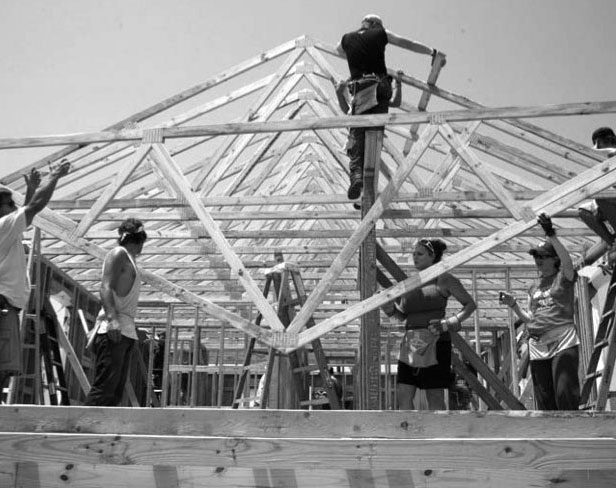
Community groups are also helping homeowners without personal resources (some of whom may be still hoping for Road Home funds) to get back into their homes. This help takes the form of sweat-equity efforts that allow families with inadequate insurance and Road Home payments to rehabilitate their homes. Rebuilding Together, for example, has gathered volunteers and donations to help rebuild the homes of 70 low-income families and seniors. Operation Helping Hands has gutted 1,925 homes and is now working with many of those same homeowners in completing the rehab process. ACORN has gutted more than 1,800 homes through the help of volunteers.
Faith-based groups are also helping families rehab both their homes and small rental properties. Galilee Housing Initiative has rehabbed 25 rental and owner-occupied units and plans to start building 50 of their 150 adjudicated properties within the next three months. The First Evangelist Housing CDC has rehabbed 40 homes.
Nonprofits are also creating new units. Habitat for Humanity has built more than 120 homes across the city to date. Other community-development and faith-based groups are building new affordable homes on formerly blighted properties, helping to combat the jack-o-lantern effect in many neighborhoods where rebuilt homes are sprinkled among vacant lots and abandoned homes. Jericho Road Episcopal Housing Initiative has built nine new houses, and has four more on the way. Neighborhood Housing Services, in addition to rehabbing 18 units, has built six new homes.
Some of the new homes have been targeted to former renters who want to become first-time homeowners and make a long-term investment in recovery. Small pools of subsidy for soft-second loans provided by the Finance Authority of New Orleans and private donations are enabling families to afford a new home. Since Katrina, Peychaud’s Neighborhood Development Foundation has been connecting residents to some of these subsidy programs, helping 33 families to become first-time homeowners and training more than 530 to prepare for buying a home.
The Road Forward
When the Democrats won control of both houses of Congress in November 2006, many on-the-ground advocates were hopeful for renewed attention to Gulf Coast rebuilding. Upon officially taking the reins in early 2007, Democrats moved quickly to hold hearings on unmet needs in the Gulf. Reps. Maxine Waters (D-Calif.) and Barney Frank (D-Mass.) and their colleagues in the Senate, Christopher Dodd (D-Conn.) and Mary Landrieu (D-La.), are helping lead efforts to pass key Gulf Coast recovery legislation. Advocacy groups are organizing constituents and working with the Louisiana delegation to gain support for vital votes expected this fall.
Provisions of the bill making its way through Congress include a plan for helping to accelerate redevelopment agencies in the most damaged parishes, repairing and redeveloping public and assisted housing, and addressing the shortfall in the Road Home program. The pilot program for the redevelopment agencies of damaged parishes ($30 million for the New Orleans Redevelopment Authority and $25 million for other parishes) will help recover and restore abandoned properties. The bill establishes an FHA-New Orleans Disaster Housing Initiative to turn over defaulted FHA-mortgaged properties to the redevelopment agency for restoration and to make them affordable to first-time homeowners.
In addition, the bill would ensure the replacement of all formerly HUD-assisted housing and grant all residents in good standing prior to the storms the right to return to a broader range of housing choices than previously available. Displaced public- and assisted-housing residents who decide to rebuild their lives in new communities will also be able to do so without threat of losing housing assistance that makes their new homes affordable.
The current draft of the bill calls for 4,500 new Section 8 housing vouchers to help stabilize the volatile private-market rental conditions. Advocates across the Gulf States are calling for this number to be raised to 25,000 and to serve households across the region.
Advocates Leading the Way
Advocacy networks can take much-deserved credit for victories so far. Their organizing activities have resulted in strong constituencies that are lifting their voices to demand recovery resources.
“The more informed people become, the more energy they put into the process,” the Rev. Don Boutte said.
New Orleanians both in and out of state are getting information and organizing support from groups such as:
- The Louisiana Housing Alliance, whose more than 100 organizational members from across the state helped gain significant provisions in the Gulf Coast Housing Recovery Act, is working to get the act passed while urging its members to encourage their constituencies to fight local NIMBYism.
- The People’s Hurricane Relief Fund and the Louisiana Diaspora Advocacy Project have been calling for improved renters’ rights, compensation for renters that is comparable to that for homeowners, and resources for residents still out of state to return home.
- The statewide grantee network of the Louisiana Disaster Recovery Foundation, a collective voice for rebuilding with representatives from many parishes in Southern Louisiana, regularly presses legislators, especially on the needs of those left behind.
Additionally, historic organizing groups have grown robust memberships since the storm:
- ACORN, the local IAF affiliate Jeremiah, and PICO/LIFT are restoring and building housing and advocating on behalf of low-income members.
- The National Low Income Housing Coalition gathers advocates across the Gulf States on weekly Katrina Housing Group calls that include representatives of Louisiana Association of Non-Profit Organizations, Oxfam America, and other local and national organizations. The calls help maintain the necessary vigilance as essential pieces of legislation move through state and federal legislative processes and to alert each organization’s constituencies.
Advocates like Don Boutte say that at the heart of all of these efforts is education, helping people recognize what is possible and how to make things happen. “We used to teach civics in school,” Boutte said. “Now most folk don’t understand how government works or where to bring pressure to bear on making change.” The hardest lesson, he concludes, “is recognizing that organizing takes time – to build strength, to recognize change won’t come overnight – but it can be done.”
The effort to rebuild New Orleans, and other small and large communities throughout the Gulf Coast, is a continuing challenge. But it is being confronted daily by organizers and advocates whose impact is growing. Their work is at the heart of the widespread acknowledgement that more needs to be done for the people of the Gulf – acknowledgement that gives the lie to those who say Americans are suffering from Katrina fatigue.
As the nation recognizes the potential for natural and unnatural disasters to happen anywhere – hurricanes, bridge collapses, bursting steam pipes, and terrorism – the call for government to live up to its responsibilities to the people will grow as well. Though there is still much more to be done, the truth is that advocacy and organizing groups are responsible for much of what has happened already.
About the Author

Comments